
AI for Learning, Assessment, and Decision-Making
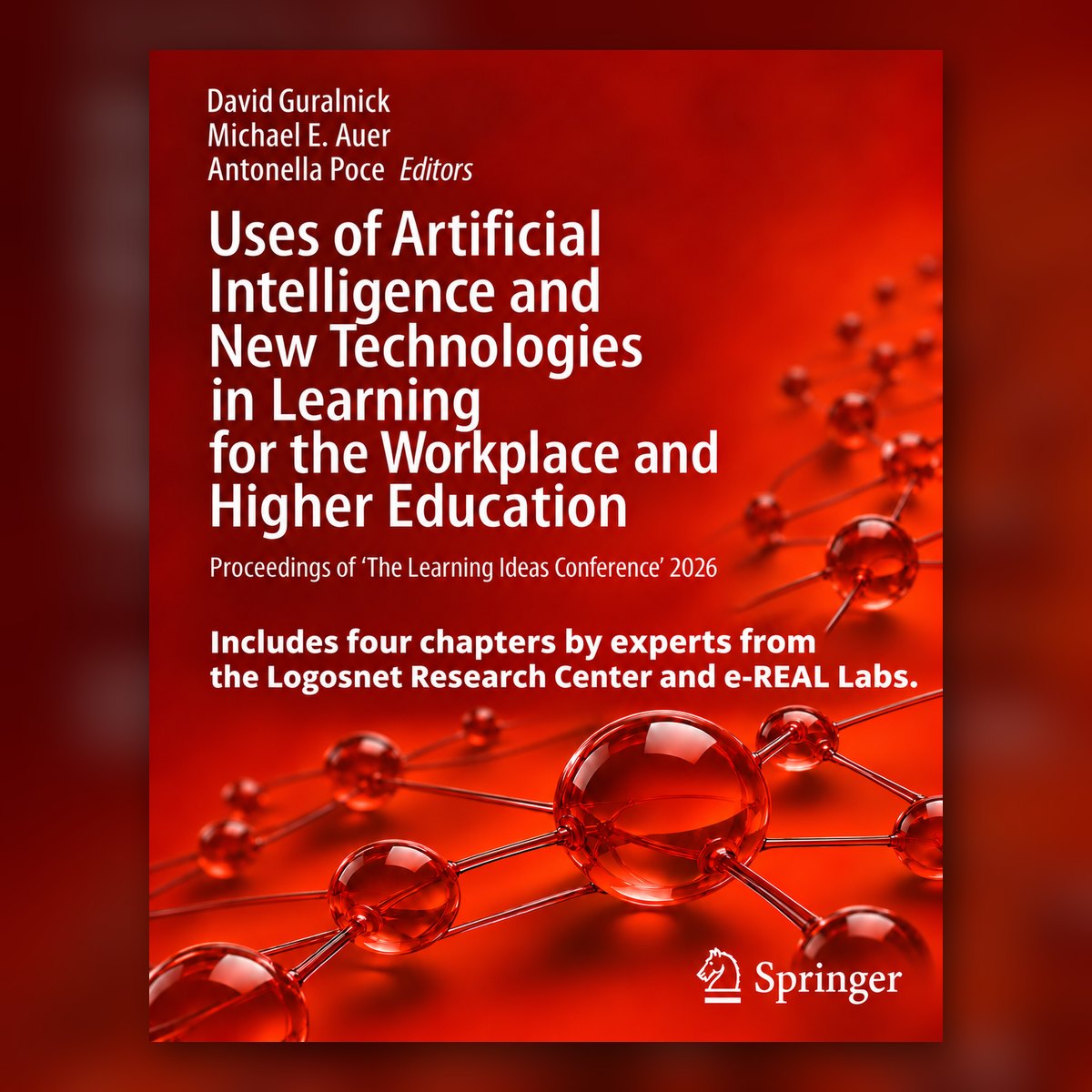
How can AI help assess aviation personnel, prepare legal teams for complex regulatory decisions, strengthen critical thinking, and improve clinical communication across languages? Four chapters by contributors from the Logosnet Research Center and e-REAL Labs explore these questions in a new Springer volume, available in 2027.
Uses of Artificial Intelligence and New Technologies in Learning for the Workplace and Higher Education brings together selected papers from The Learning Ideas Conference 2026. The volume is edited by David Guralnick, Michael E. Auer, and Antonella Poce.
Four areas of application
- Aviation hiring and training. A patented system uses conversational AI to conduct structured interviews and simulate workplace scenarios. It supports the assessment and development of competencies such as passenger communication, conflict de-escalation, and operational coordination.
- Intelligent compliance. The chapter explores how AI agents can help legal teams track regulatory developments across jurisdictions and how extended reality (XR) can help them rehearse decisions in settings such as regulatory hearings and cross-border negotiations.
- Socratic Prompting and critical thinking. Inspired by the Socratic method, this approach trains people to question their assumptions and examine the answers they receive from generative AI. The chapter illustrates the method through Socrates, a conversational avatar developed at e-REAL Labs.
- Multilingual communication in nursing education. Using e-REAL Multilingual Conversation Mastery, nursing students can practice adaptive conversations with virtual patients, family members, and colleagues. The simulations support training and assessment in active listening, empathy, and clear communication across languages.
Fernando Salvetti and Barbara Bertagni co-authored all four chapters. Roxane Gardner and Jenny Rudolph of the Center for Medical Simulation in Boston joined them as co-authors of the chapter on nursing education.